Why “I’m Fine” Isn’t Always the Truth Men Need to Tell Themselves

For a long time, “I’m fine” was my default answer.
Someone would ask how I was doing, and without even thinking, I’d say it.
I’m fine.
Busy week? Fine.
Sleeping badly? Fine.
Stressed out? Fine.
Feeling disconnected from myself? Still fine.
The strange part is that most of the time, I wasn’t trying to lie.
I think I genuinely believed that if I was still functioning, then I must be okay.
But eventually, I learned something the hard way:
Functioning is not the same as being fine.
“Fine” Became a Shield
I think a lot of men use “I’m fine” as a kind of shield.
Not because we’re trying to be dishonest, but because it feels easier than explaining what’s really going on.
Sometimes we don’t have the words.
Sometimes we don’t want to seem like we’re complaining.
Sometimes we don’t want anyone to worry.
And sometimes, we don’t want to admit the truth to ourselves.
That was definitely true for me.
Saying “I’m fine” let me avoid asking harder questions, like:
Why am I so tired all the time?
Why am I so irritable lately?
Why do I feel like I’m just pushing through every day?
When did I stop feeling like myself?
Those questions were uncomfortable.
So I avoided them.
The Problem With Ignoring Emotional Stress
For years, I thought stress was mostly a mental thing.
Something you just deal with and move past.
But stress doesn’t stay neatly in your head.
It shows up in your body, your energy, your patience, your sleep, and your habits.
For me, it looked like:
- waking up already tense
- snapping over small things
- feeling tired even after resting
- avoiding conversations I probably needed to have
- using food, scrolling, or busyness to distract myself
None of those things seemed dramatic on their own.
But together, they were signs that I wasn’t as “fine” as I kept saying.
Why Men Often Miss the Signs
I think men are often trained to notice physical problems before emotional ones.
If something hurts in the gym, we understand that.
If we’re sick, we understand that.
But emotional stress can be harder to recognize.
We may not say:
“I feel overwhelmed.”
Instead, we say:
“I’m tired.”
“I’m busy.”
“I just need a break.”
And sometimes those things are true.
But sometimes there’s more underneath.
That’s why checking in with yourself matters.
Not in a dramatic way. Just honestly.
The Moment I Realized I Wasn’t Fine
There wasn’t one big breakdown.
It was quieter than that.
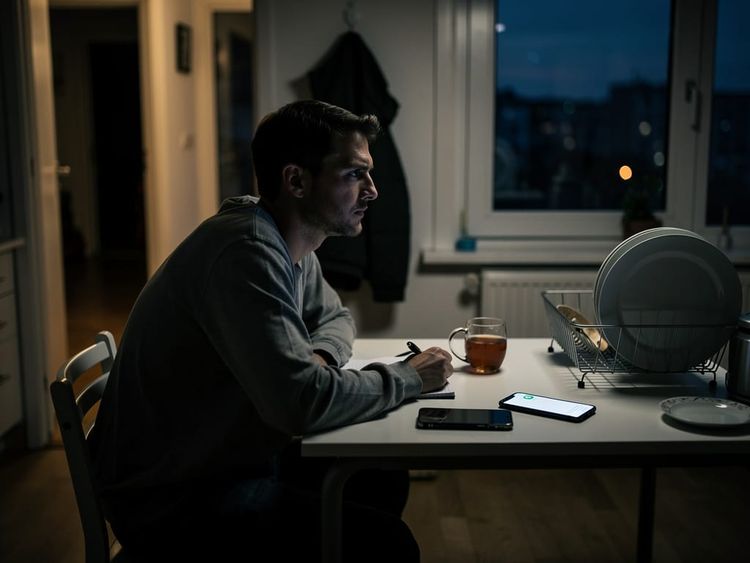
I remember sitting at the end of a long day, completely exhausted, but unable to relax.
Nothing was technically wrong.
Work was okay. Life was okay. I had no obvious reason to feel the way I did.
But I felt heavy.
Mentally and physically.
And for once, instead of distracting myself, I asked:
“Am I actually fine, or am I just used to feeling like this?”
That question hit hard.
Because the answer was obvious.
I wasn’t fine.
I was overwhelmed, tired, and disconnected from what I actually needed.
Emotional Awareness Isn’t Weakness
This is something I wish more men understood.
Being honest about how you feel doesn’t make you weak.
It makes you aware.
And awareness is useful.
If your car makes a strange noise, you don’t ignore it forever and call that strength.
You pay attention because ignoring it could make the problem worse.
Your mind and body deserve the same respect.
Checking in with yourself isn’t overthinking.
It’s maintenance.
What Checking In Looks Like for Me Now
I don’t make it complicated.
I just ask myself a few simple questions:
How am I actually feeling today?
Am I tired, stressed, angry, or avoiding something?
What have I been using to distract myself?
What do I need right now - rest, movement, food, quiet, or a conversation?
Sometimes the answer is simple.
I need sleep.
I need to move.
I need to eat properly.
I need to stop scrolling and go outside.
Other times, the answer is deeper.
I need to admit something has been bothering me.
I need to set a boundary.
I need to talk to someone.
I need to stop pretending I’m okay when I’m not.
Catching Stress Before It Becomes Burnout
The biggest benefit of checking in is that I catch things earlier now.
Before, I waited until I was exhausted, irritated, and mentally drained before I admitted anything was wrong.
Now, I try to notice the smaller signals:
- poor sleep
- short temper
- lack of motivation
- constant distraction
- feeling emotionally flat
Those signs don’t mean failure.
They mean something needs attention.
And the earlier I respond, the easier it is to recover.
I Still Say “I’m Fine” Sometimes
I’m not perfect at this.
Sometimes I still say “I’m fine” automatically.
Sometimes it’s because I don’t feel like explaining.
Sometimes it’s because the moment isn’t right.
But now I try not to say it to myself unless it’s actually true.
That’s the important part.
Other people don’t always need the full explanation.
But I owe myself honesty.
Final Thoughts
“I’m fine” can be true.
But sometimes it’s just a habit.
A way to avoid stress, discomfort, or emotions we haven’t taken time to understand.
For me, learning to check in honestly has been one of the most important parts of taking care of my health.
Not just physical health.
Real health.
The kind that includes your mind, your energy, your stress, your habits, and the way you show up in your own life.
You don’t have to have everything figured out. But you do owe yourself the truth. Sometimes “I’m fine” is the easiest answer - not the honest one.
Don't miss out on future updates!
Join our newsletter to get the latest insights delivered straight to your inbox.